

Cry me a river
Rivers as subject, lover, and glitch in our systems

Last year, during a talk I gave at Torino Service Design Drinks on Hybrid Intelligences, I asked a deliberately simple question: What would happen if we gave the rivers a voice? To test the idea before the talk, out of curiosity, I asked AI to design an app that would give rivers a voice. It came back with a sleek dashboard (controls, alerts, graphs..). The river had immediately become a dataset, something to manage. The problem wasn’t the machine. It was us. The interface only reflected how deeply our culture confuses listening with control.
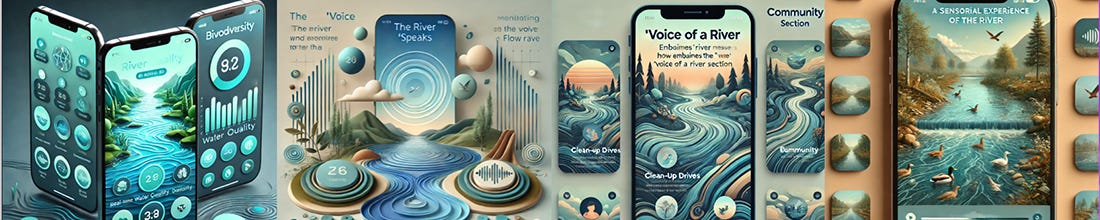
The river here was a proxy. A metaphorical frontline for the more-than-human world. All that flows through and beyond us: soils, fungi, winds, microbes. Giving rivers a voice isn’t an ecological gimmick; it’s a thought experiment in power. It asks how our institutions, relational modes, and rituals might evolve once we accept that intelligence is already distributed.
All this came back to me as I recently watched Families Like Ours by Thomas Vinterberg, where Denmark, faced with rising sea levels, decides to shut down as a country and relocate all of its citizens (prisons and retirement houses included), making them all climate refugees. The fiction is speculative, but the failure it describes isn’t. I kept thinking of all the silenced waters, how long they must have tried to speak.
“Cry me a river,” the idiom says, the language of indifference, of someone done listening. We built a civilisation on that tone. But what if we let the river cry back, would we hear it?
Rivers as legal subjects
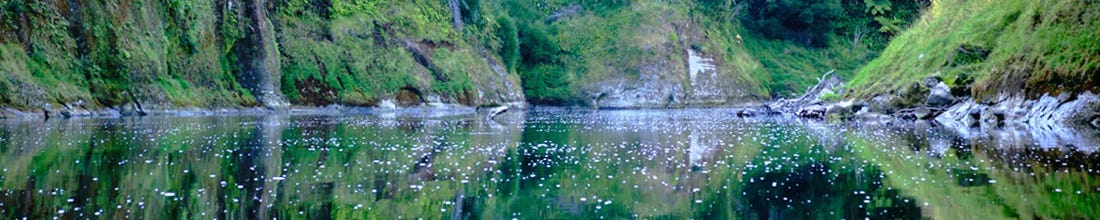
That cry, in some places, has been translated into legal form. Across continents, rivers are entering the legal record. And that’s not entirely new. Since 2017, in Aotearoa, the Whanganui River became a legal person under the Te Awa Tupua Act of New Zealand Parliament. Two guardians. One Māori (because their cosmology has always considered non-humans), and one Crown (because of colonialism), now speak on its behalf in Parliament. More than thirty rivers, lakes, and ecosystems across the world now hold comparable status. Each case reframes what sovereignty means when shared with the living world.
Together they signal a slow revolution of knowledge. States and capitalism are the fruit of a certain writing of the law, and when the law changes, so do the terms of our habitation.
Yet, law can register a voice, but it takes literature to let it resound.
Rivers finding a voice
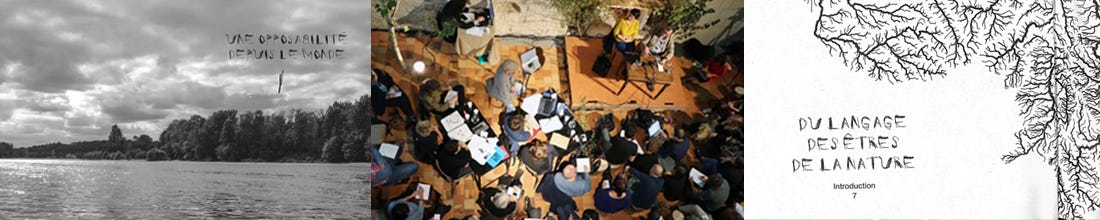
In Le Parlement de l’Eau, (“The Parliament of Water”, not yet translated), Wendy Delorme gives voice to all forms of water (rivers, rains, tides, snowmelt, marshes..) as a collective chorus. It reads like an infiltration seeping through language rather than telling a story. Her waters seep through language, sometimes whispering, sometimes interrogating. What fascinated me is how they behave like investigators, tracking erasure, pollution, and memory across landscapes. As if water itself was a detective of its own disappearance.
To make such resonance powerful, it has to become a collective endeavour. In The River That Wanted to Write”, Camille de Toledo tells the story of the hearings of the Parliament of the Loire. In this collective experiment, jurists, artists, scientists, and local residents gathered between 2019 and 2021 to imagine a constitution with the Loire River. The Loire was chosen precisely because it is conflicted: a basin where extraction, agriculture, and energy collide with memory and attachment. The hearings became a “theatre of metamorphosis”, a place where non-human beings could finally enter through the ears of humans.
If law is where rivers gain standing, and literature where they gain resonance, ritual is where they gain body.
Rivers love ritualised
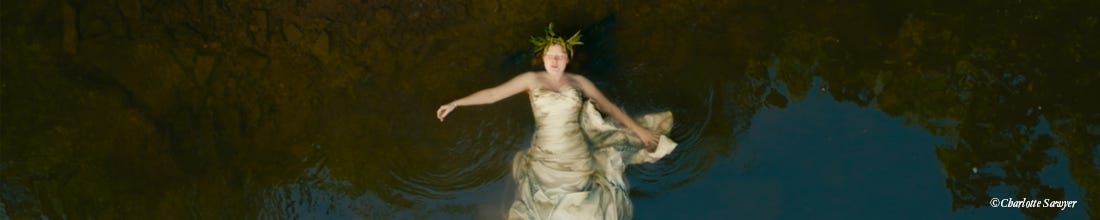
Rituals are the space where voice turns into vow, where the relationship becomes enacted rather than imagined. Take Mrs Meg Avon, a poet and activist from Bristol who married her local river, the Avon, in 2023. Her ceremony was less a performance than pact, a declaration of love and guardianship for a waterway at risk. Since then, she has led pilgrimages to the river’s source and founded World Water Wedding Day, inviting others to “come forward as guardians.” Through ritual, her commitment became porous, extending to a wider community of care.
As reported by the Tate Modern, in Sussex, the Love Our Ouse collective staged a different kind of vow. Artists, locals, and ecologists gathered along the River Ouse to celebrate it. What began as an artistic workshop became collective rite of attention, where art rehearsed a politics of care.
And in the Peruvian Amazon, Mari Luz Canaquiri reminds us that these rituals are not new. For the Kukama people, the river ( the ɨa) is life force and mother, home to the Karuara, the people of the river who visit humans in dreams. Through the Kukama Women’s Federation, Canaquiri defends both the river and the cosmology it carries.
These rituals don’t look backward; they prototype another way of holding power. Fragile protocols of relation in a world built on control. And that’s the glitch in the system
When systems glitch
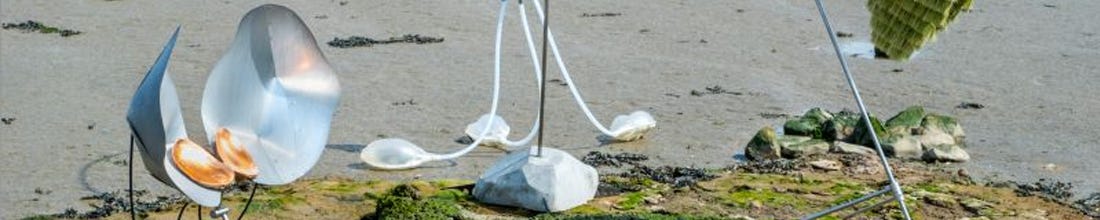
Even technology has begun to stutter toward awareness. As part of the More-than Human exhibition at the London Design Museum this summer, Superflux Studio’s installation Nobody told me what river dreams placed sculptural sensor-objects along the Thames. Bird-song detectors, water-flow sensors, weather monitors. But here’s the glitch: those objects do more than collect data, they are trained with folklore, indigenous ecological wisdom, local materials. Everything missing from my Turin experiment, when I let AI do the entire job.
That, to me, is what hybrid intelligence looks like: a distributed cognition where biological, technological, and symbolic systems begin to act together.
A listening experiment
Yet even the most sensitive technology can only gesture towards what languages already know: listening is not a function, but a relationship.
Writer Robert Macfarlane explores this in Is a River Alive? In his conversation with Emergence Magazine, Macfarlane insists that “a river runs through each of us”. Listening to rivers, he suggests, is an exercise in humility, an unlearning of dryness, a refusal to remain on the bank.
Before leaving you to the flow of your day, I’ll share one last experiment. I listened to Impersonating a River on LYL Radio, a sound work where human and river voices dissolve. It struck me as a simple protocol for attunement.
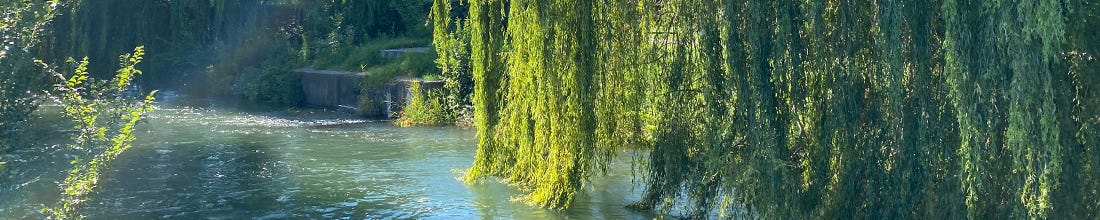
If hybrid intelligence is the art of thinking with, rather than about, then even a small act of attunement can serve as an experiment, I thought. So I tried at the Martesana in Milan, the small river that runs past my street. I can’t say it was a “conversation” but there was a dialogue nonetheless. A dialogue about flow. When we try to talk to non-humans, unexpected questions arise…
You can try it yourself: go to the nearest stream or canal nearby, any moving water will do. Listen first. Record its pulse. Then speak back and listen for where your words collide. There might be gaps, stumbles or new questions arising. They’re might be signals of another intelligence rearranging your own. This is what hybrid intelligence sounds like when it leaks outside the lab. Messy, porous, alive.
Let the river cry back
The river, in the end, is only one messenger. Behind it stands the entire more-than-human Parliament. The soils rewriting law, the fungi negotiating trade, the winds re-zoning coastlines, the algorithms learning to sense context instead of command.
To let the river cry back is to meet the world as subject, as lover, as glitch; speaking through law, through touch, through the fracture in every system we thought was closed.
PS: I’ve written a shot novel in this same current, about a Rose that remembers. Coming soon on Posthuman Press. I’ll be talking more about it here, so stay tuned.
Such a beautiful confluence of ideas, thank you for your words
Inspiring as always